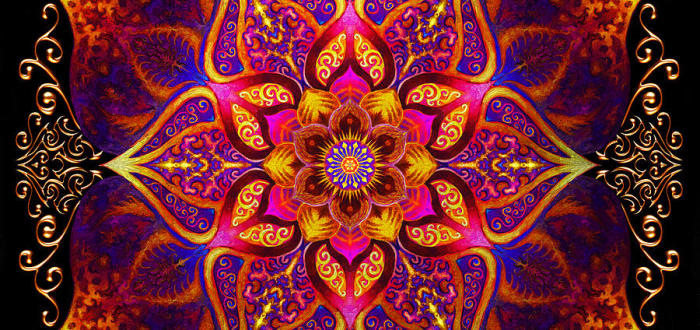
Love and Individuation

Love and Individuation

(I wrote the following for the Jung Society of Utah blog. Click here to see it on their website!)

“Nothing is possible without love…for love puts one in a mood to risk everything.”
– C.G. Jung

Carl Jung used the term individuation to describe the “process of integrating the conscious with the unconscious for the purpose of realizing or fulfilling one’s talents and potentialities.” Individuation usually begins with a crisis, often death or some other loss. “The shattering, emotional power of such crises breaks down our ego identification, causing us to question our sense of self and our life’s meaning.”1

Love as a Crisis

That same “shattering, emotional power” may also be found in love. Jung considered Eros to be a “kosmogonos, a creator and father-mother of all higher consciousness.” He wrote, “we are in the deepest sense the victims and the instruments of cosmogonic love.” Falling in love “can shatter normal ego identifications. Through such experiences of ego death, we awaken to a more expansive way of being.”1

img_20140311_230210

Our relationships may reflect contents of our unconscious. (Image via aestheticblasphemy.com).

A Mirror for the Soul

In The Red Book, Jung wrote that he found his soul again “only through the soul of the woman.”2 He later explained that unconscious contents are first met in relationship with a partner: “This urge to a higher and more comprehensive consciousness … if it is to fulfill its purpose, needs all parts of the whole, including those that are projected onto a ‘You.’”3, 4

Often, it can seem easier to love someone else than to love oneself. We may be more willing to see and accept both the light and shadow aspects of another than to acknowledge those same aspects within ourselves. However, Jung said, “We meet ourselves time and again in a thousand disguises on the path of life,” meaning that any light or shadow traits we see in others are merely a reflection of those traits within us.

twisting-love-ii-original-painting-by-madart-megan-duncanson

Love can be a transformative process of mutual individuation. (Image: “Twisting Love” via paintinghere.com).

Both Are Transformed

Sometimes it is through loving another, including their shadow aspects, that we learn to accept and even love those same shadow aspects in ourselves. “If one’s partner is ‘truly loved,’ then that human being becomes a ‘representative of the unconscious.’ Love is a mediator, circulating energy both outwardly and inwardly.”4

This type of love, which breaks through “the illusory maya of unconscious projections,” could be considered “a process of mutual individuation.”4 If the tension of opposites can be held, a “third kind of relationship” can be formed, which Jung called a “Golden Thread.”4 He considered this type of relationship to be “the only lasting one, in which it is as though there were an invisible telegraph wire between two human beings.”4

Jung said, “The meeting of two personalities is like the contact of two chemical substances: if there is any reaction, both are transformed.” Through the transformative reaction of love, one may discover “the distinction between what one really is and what is projected into one, or what one imagines oneself to be.”4 Understanding that distinction contributes greatly to individuation.

Books Cited

  1. Lucid Dreaming: New Perspectives on Consciousness in Sleep, Volume 1. Ryan Hurd and Kelly Bulkeley.
  2. The Red Book: A Reader’s Edition. C.G. Jung.
  3. The Psychology of the Transference. C.G. Jung.
  4. Jung in Love: The Mysterium in Liber Novus. Lance S. Owens. PDF provided by the author here.

Addiction: A Jungian Perspective

Addiction: A Jungian Perspective

(I wrote the following post for the Jung Society of Utah blog. The free workshop on addiction at beautiful Cirque Lodge in Orem, UT was a wonderful and highly informative event.)

“[Addiction is] the equivalent, on a low level, of the spiritual thirst of our being for wholeness.”
– C.G. Jung

Carl Jung was highly influential in the founding of Alcoholics Anonymous (AA). Jung intuited that those suffering from addiction were actually in search of the numinous, or a spiritual experience associated with the divine. Jung shared this insight in a letter to Bill W., one of the founders of AA.

A “Hopeless” Case

Rowland H. (recoveredalcoholic.blogspot.com).
Rowland H. (Image from recoveredalcoholic. blogspot.com).

In 1926, Jung treated an American patient named Rowland H. for alcoholism. However, Rowland relapsed soon after leaving Zurich. He returned to seek Jung’s help. Jung told Rowland that neither medicine nor psychiatry had a cure for alcoholism, but explained, “Exceptions to cases such as yours have been occurring since early times. Here and there, once in a while, alcoholics have had what are called vital spiritual experiences.” Jung described such experiences as “huge emotional displacements and rearrangements. Ideas, emotions, and attitudes which were once the guiding forces of the lives of these men are suddenly cast to one side, and a completely new set of conceptions and motives begin to dominate them.” However, Jung cautioned that these experiences are “comparatively rare.”

Many years later, Jung received a letter from Bill W., explaining that Rowland had joined a religious movement called the Oxford Groups, and there he found “a conversion experience that released him for the time being from his compulsion to drink.” Rowland carried this message of inner change to his friend, Ebby T., who then carried it to Bill, who co-founded AA. In his letter to Jung, Bill wrote, “This astonishing chain of events actually started long ago in your consulting room, and it was directly founded upon your own humility and deep perception.”

“Spiritus Contra Spiritum”

Jung treated many alcoholic patients at the Burghölzli Psychiatric Hospital in Zurich (Image from Wikimedia).

In his reply to Bill W., Jung wrote, “You see, “alcohol” in Latin is “spiritus” and you use the same word for the highest religious experience as well as for the most depraving poison. The helpful formula therefore is: spiritus contra spiritum.” Jung believed it is necessary to replace the addictive substance with a transcendent experience that the individual finds more satisfying. He explained that this type of experience “can only happen to you when you walk on a path which leads you to higher understanding. You might be led to that goal by an act of grace or through a personal and honest contact with friends, or through a higher education of the mind beyond the confines of mere rationalism.”

Psychologist James Hillman phrased it more simply: “You don’t really want the alcohol. If you can find out what you really want, if you can find your true desire, then you’ve got the answer to your addiction.”

Would you like to learn more about addiction and recovery? Attend a FREE workshop at Cirque Lodge on Saturday, November 14, 2015. In this workshop, we will explore the roots of Jung’s influence and the practical application of these insights in addiction treatment today.

The presenters will be: Burton Fullmer CMHC, CPW, Beverly Roesch, LCSW, SUDC and Machiel Klerk, LMFT

Read about the presenters HERE.

All mental health professionals are eligible to receive three (3) complimentary CEs.

Details

When: Saturday November 14th, 2015
Time: 10:00 am-1:00 pm
Where: Cirque Lodge Orem, 777 N. Palisade Drive, Orem, Utah 84097

THIS EVENT IS FREE AND OPEN TO THE PUBLIC. NO NEED TO RESERVE A SPOT. SIGN IN WHEN YOU ARRIVE.

This event is sponsored by Trace Minerals Research.

Mandalas: Symbols of the Self

Mandalas: Symbols of the Self

(This was my very first post for the Jung Society of Utah blog. Soon after I submitted it for publication, I had the most lovely dream about meeting Jung, chatting with him, and giving him a hug.)

“I sketched every morning in a notebook a small circular drawing, a mandala, which seemed to correspond to my inner situation at the time… Only gradually did I discover what the mandala really is: … the Self, the wholeness of the personality, which if all goes well, is harmonious.”
– C.G. Jung

Carl Jung used the Sanskrit word mandala, meaning “magic circle,” to describe the circular drawings he and his patients created. While mandalas have been used throughout many ancient traditions, including Buddhism and Hinduism, Jung is credited with introducing these images to the Western world. Jung studied mandalas extensively, finding a great deal of potential symbolic meaning in them. He intimately associated them with psychological and spiritual health.

Mandalas are beautiful images that have strong symbolic meaning. Image by deviantart.com.

An Archetype of Wholeness

Jung created his first mandala in 1916, before learning about the Eastern tradition. And he used mandalas as an important component of his work with patients, as well as in his own personal development. Believing that mandalas were archetypal  forms representing the Self, or total personality, he referred to them as “archetypes of wholeness.” Jung discovered that dreaming of or creating mandalas is a natural part of the individuation process, and he encouraged his patients to create them spontaneously. When a mandala image appeared in a patient’s artwork or dreams, he found it usually indicated progress toward new self-knowledge.

“The severe pattern imposed by a circular image of this kind compensates the disorder of the psychic state–namely through the construction of a central point to which everything is related,” Jung stated. He believed that the circle invites conflicting parts of our nature to appear and allows for the unification of opposites in order to represent the sum of who we are. He found this sense of wholeness was reflected in the lives of his patients, as he was able to trace the progression of an individual’s psychological recovery by correlating it with the coherence of the mandalas they drew.


Carl Jung found that patients' mandalas intuitively expressed their need for wholeness. Image courtesy of Clinical Psych Reading.
Carl Jung found that patients’ mandalas intuitively expressed their need for wholeness. Image courtesy of Clinical Psych Reading.

Jung’s patients created mandalas intuitively, and he observed that patients with no prior knowledge of mandalas repeatedly created very similar images throughout the course of their progress. This enabled him to identify emotional disorders and work towards wholeness in personality.

Some of the common symbols Jung encountered as he interpreted mandalas included circular or egg-shaped formations, flowers or wheels, circles within a square or the reverse, which Jung was particularly interested in. He frequently saw the number four or its multiples in mandalas, which was often represented by squares, crosses or suns or stars with four or eight rays. Discovering what these symbols meant to patients gave Jung insight into their personalities, challenges and more.

A Sacred Space for the Self

Jung believed that creating mandalas offered a “safe refuge of inner reconciliation and wholeness”, providing a sacred space into which we can invite the Self. He also noticed that creating mandalas had a calming, focusing effect on his patients’ psychological states. I’ve personally observed this to be true as I’ve drawn and colored my own mandalas.

When we create mandalas, we are making a personal symbol that represents who we are at the moment. Would you like to see a reflection of your Self? You can color a mandala or try drawing one of your own. Then, check out how to interpret your mandala by visiting this site!