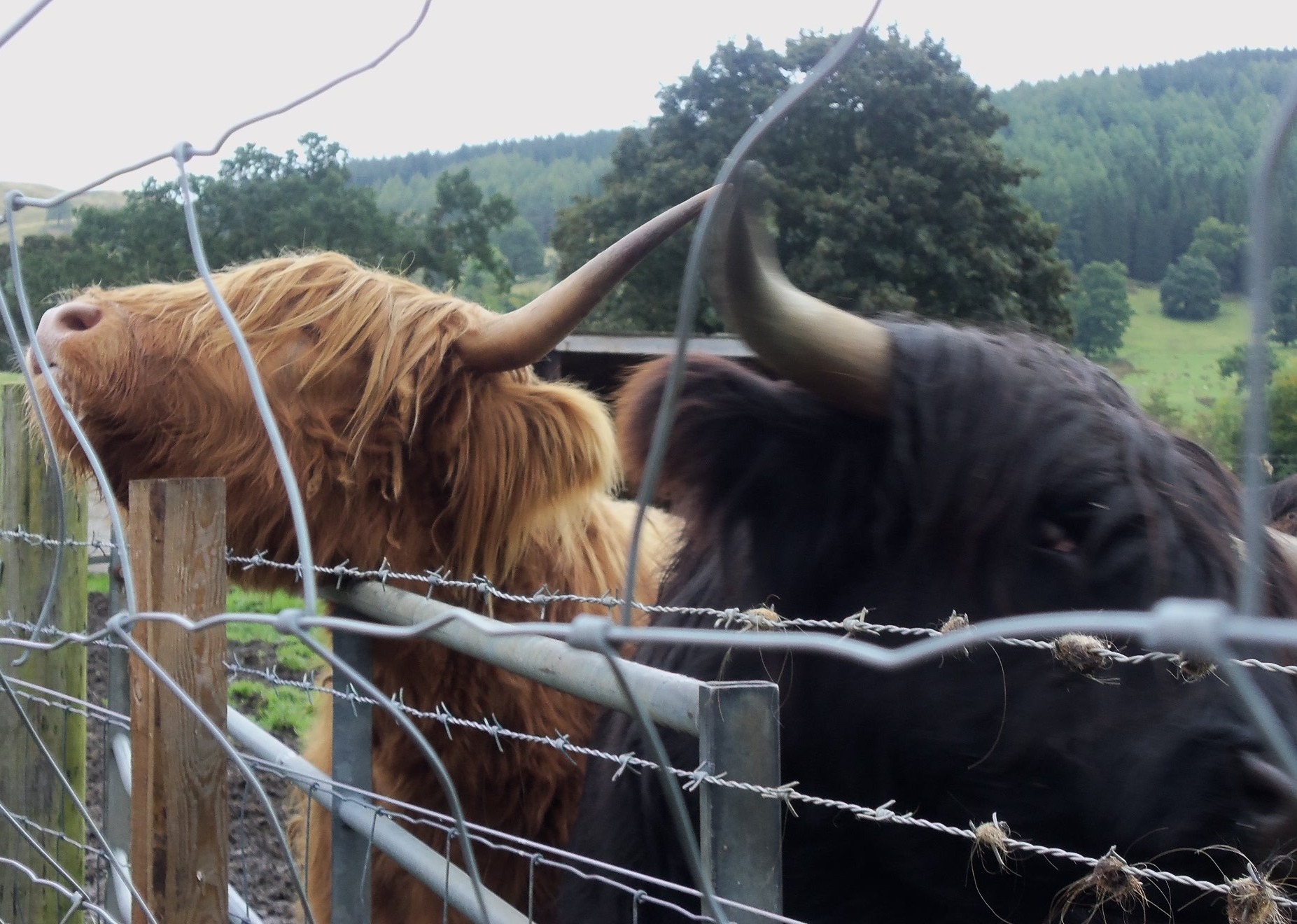
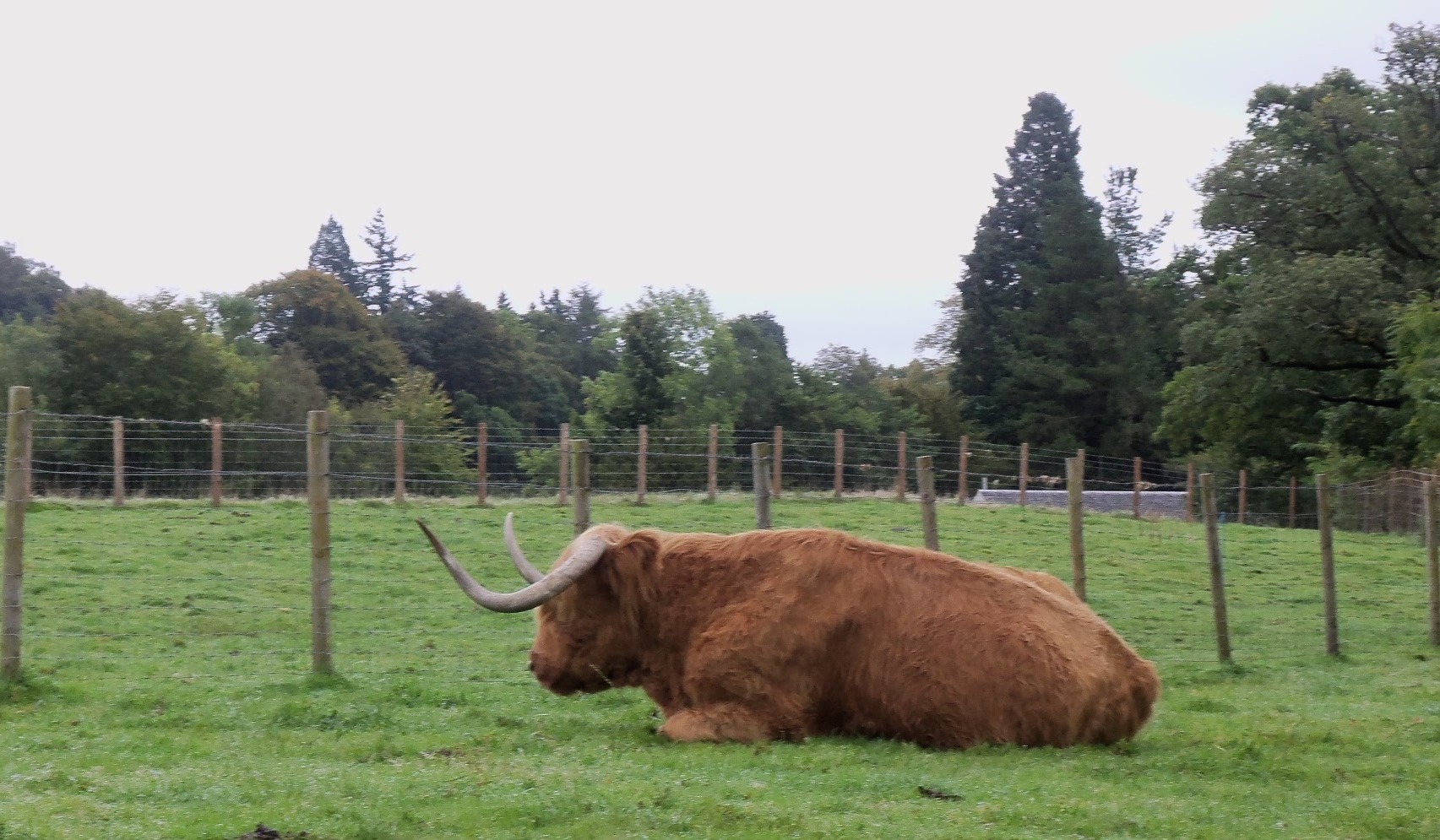
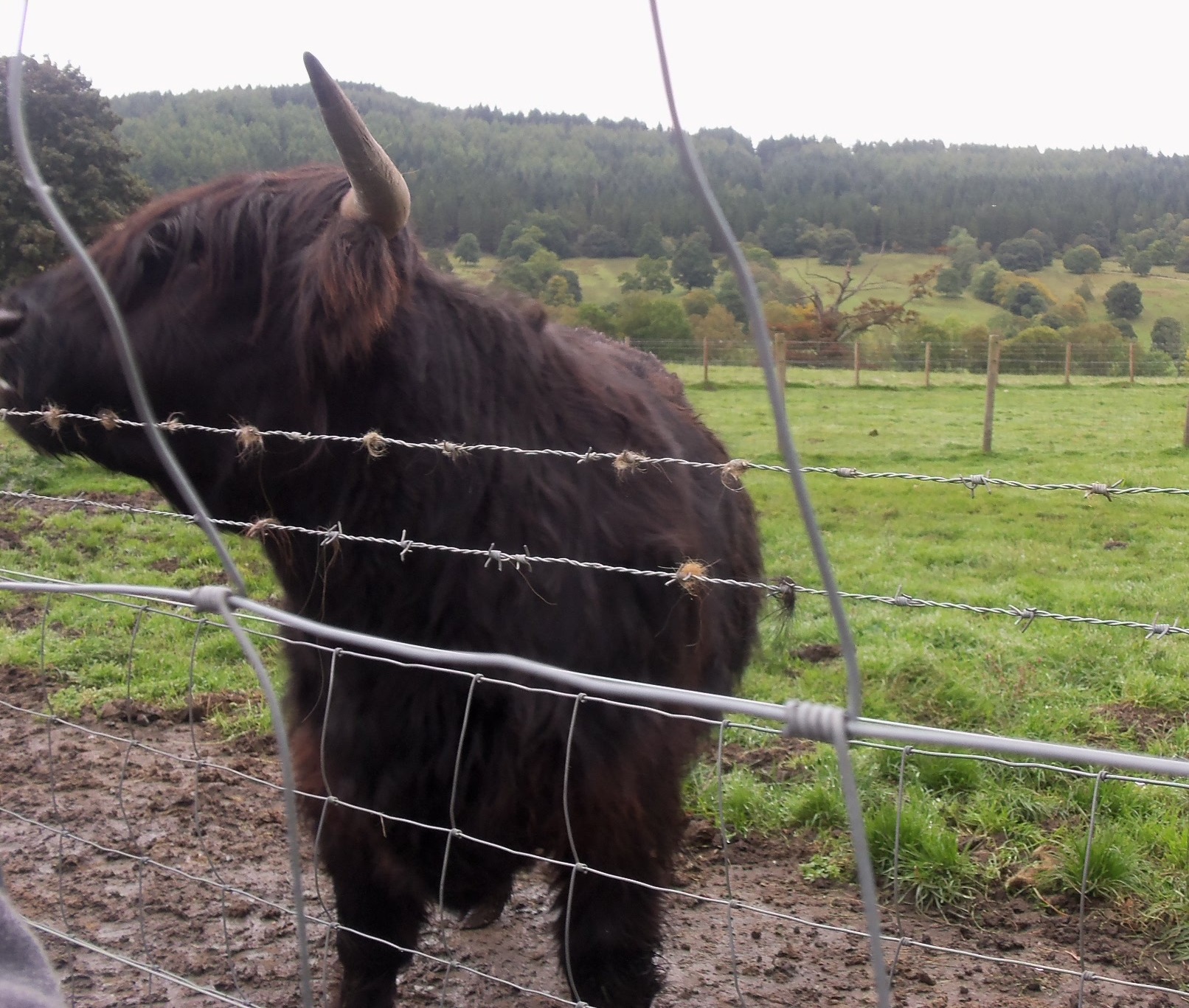
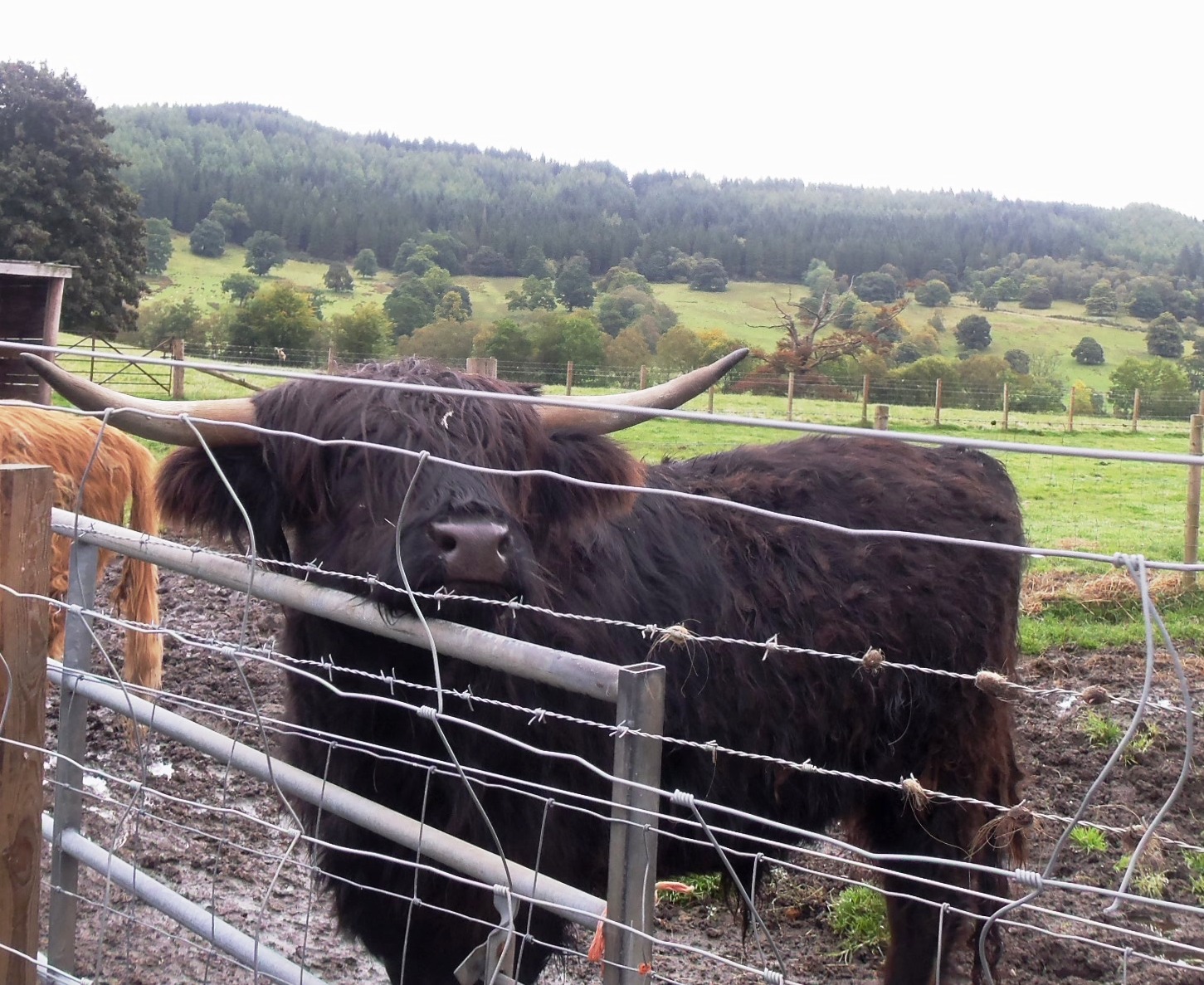
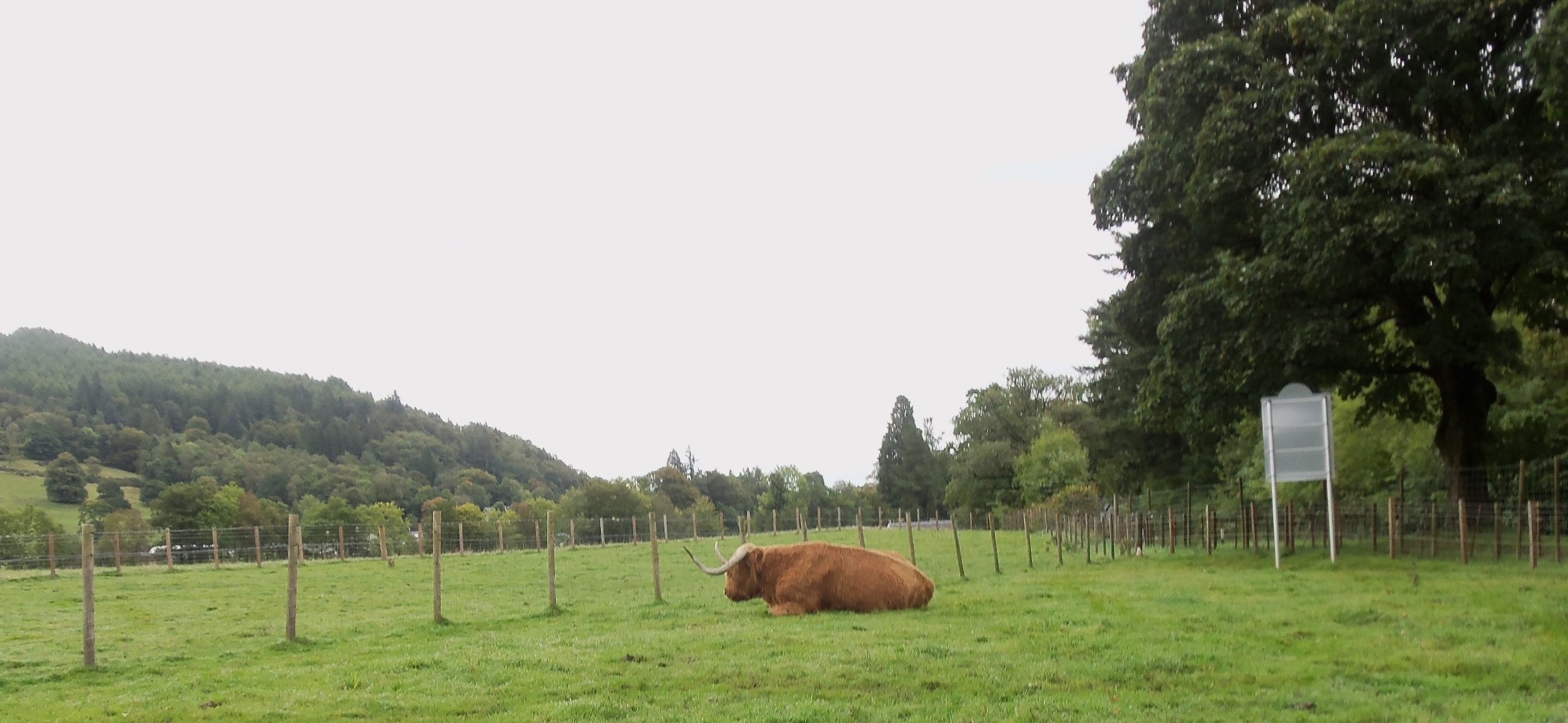
The tour I went on included a short stop to see him and his two girlfriends:
Hamish seemed to be feeling a bit antisocial that day (which I totally understand). He was just relaxing by himself at the other side of the field, away from all the tourists.
However, his two lady friends seemed to be enjoying all of the attention, especially the snacks.
Hamish and his friends are located at Trossachs Woolen Mill, Kimahog (near Callender on the A84, 1 mile west of Callender).
A bag of vegetables to feed to the cows is available in the gift shop for 20p.
I recently returned from a 9-day vacation in Scotland and England. These are some pictures from Scotland that made me smile, but don’t really fit anywhere else.
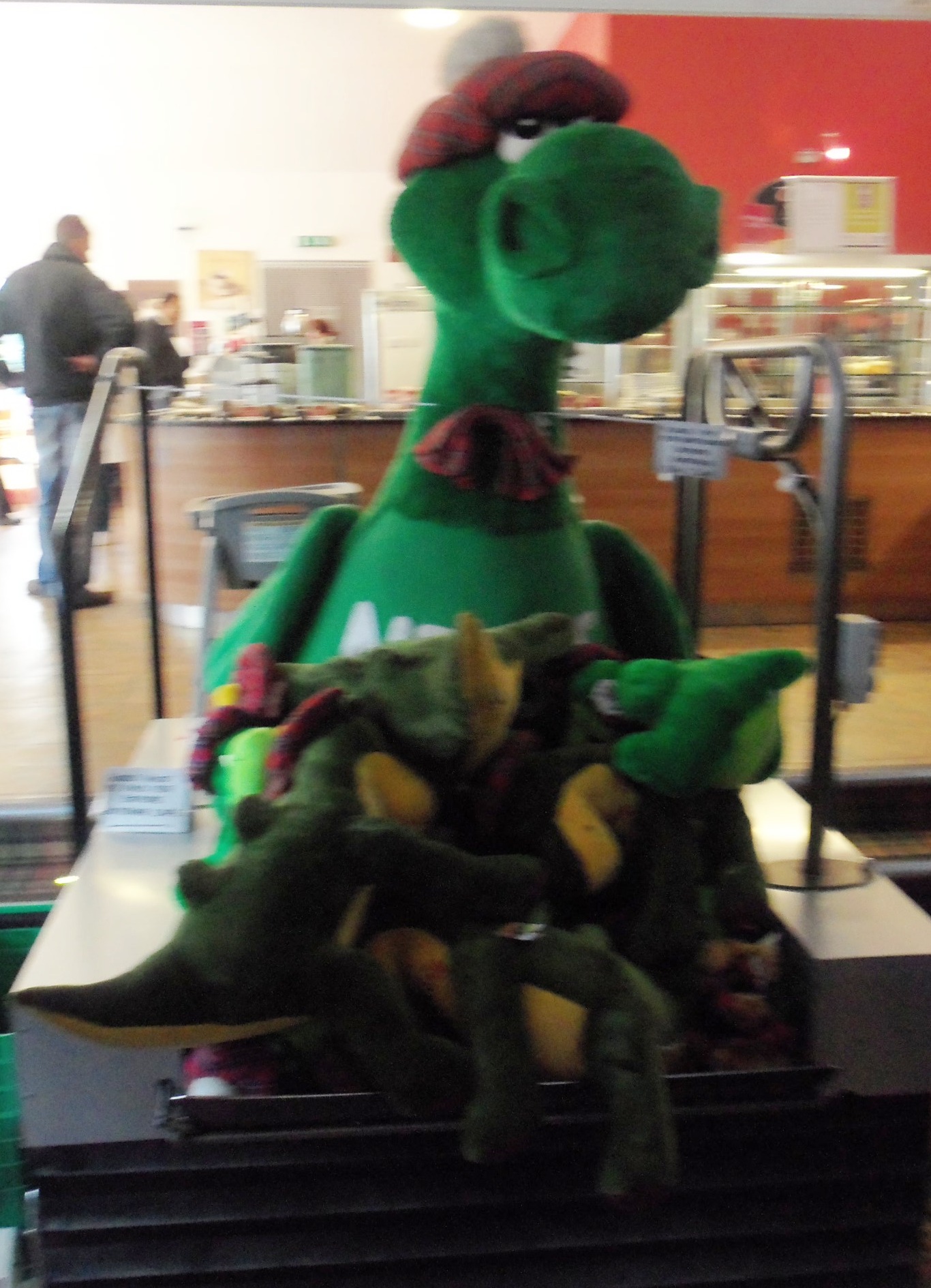
Obviously no visit to Scotland would be complete without a visit to Loch Ness to try and spot Nessie. Unfortunately, I was only able to spot this giant stuffed Nessie in the gift shop adjacent to the Loch.
Yes, this is the closest I came to seeing the Loch Ness Monster.
I was told I needed to try Irn Bru, which is a popular soft drink in Scotland. Very popular–I saw people drinking it everywhere.
Irn Bru
It was…interesting. It had a very strong artificial orange and vanilla flavors, kind of like a carbonated, caffeinated creamsicle. Actually, I didn’t really like it, and didn’t finish the bottle.
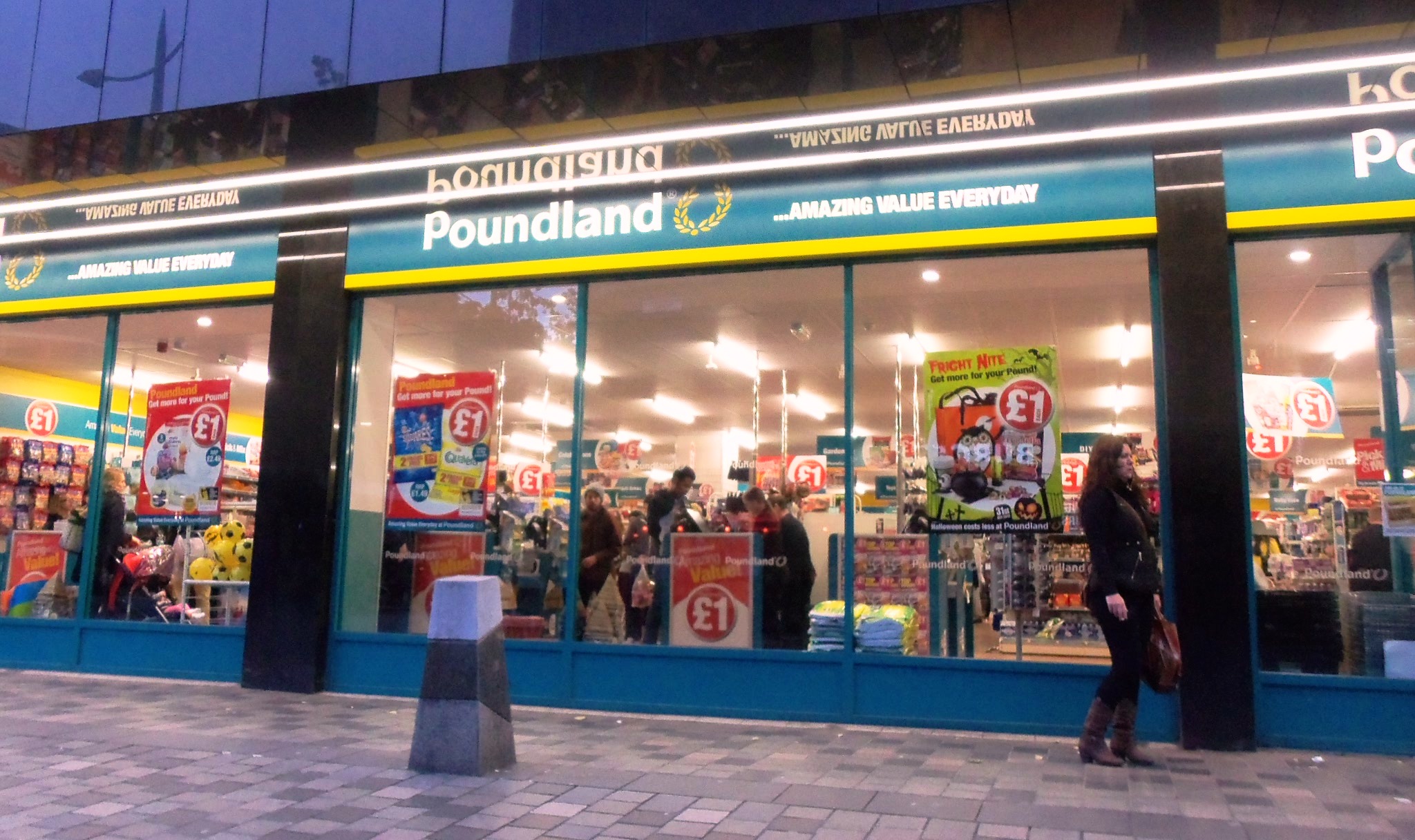
Here’s a chain of discount stores in the UK, sort of like all the dollar stores in the US:
Of course I went in. They seemed to have slightly better merchandise than their US counterparts. I was especially happy to find boxes of Happy Hippo cookies for only 1 pound per box (you can get them in the US, but they’re hard to find and ridiculously overpriced).
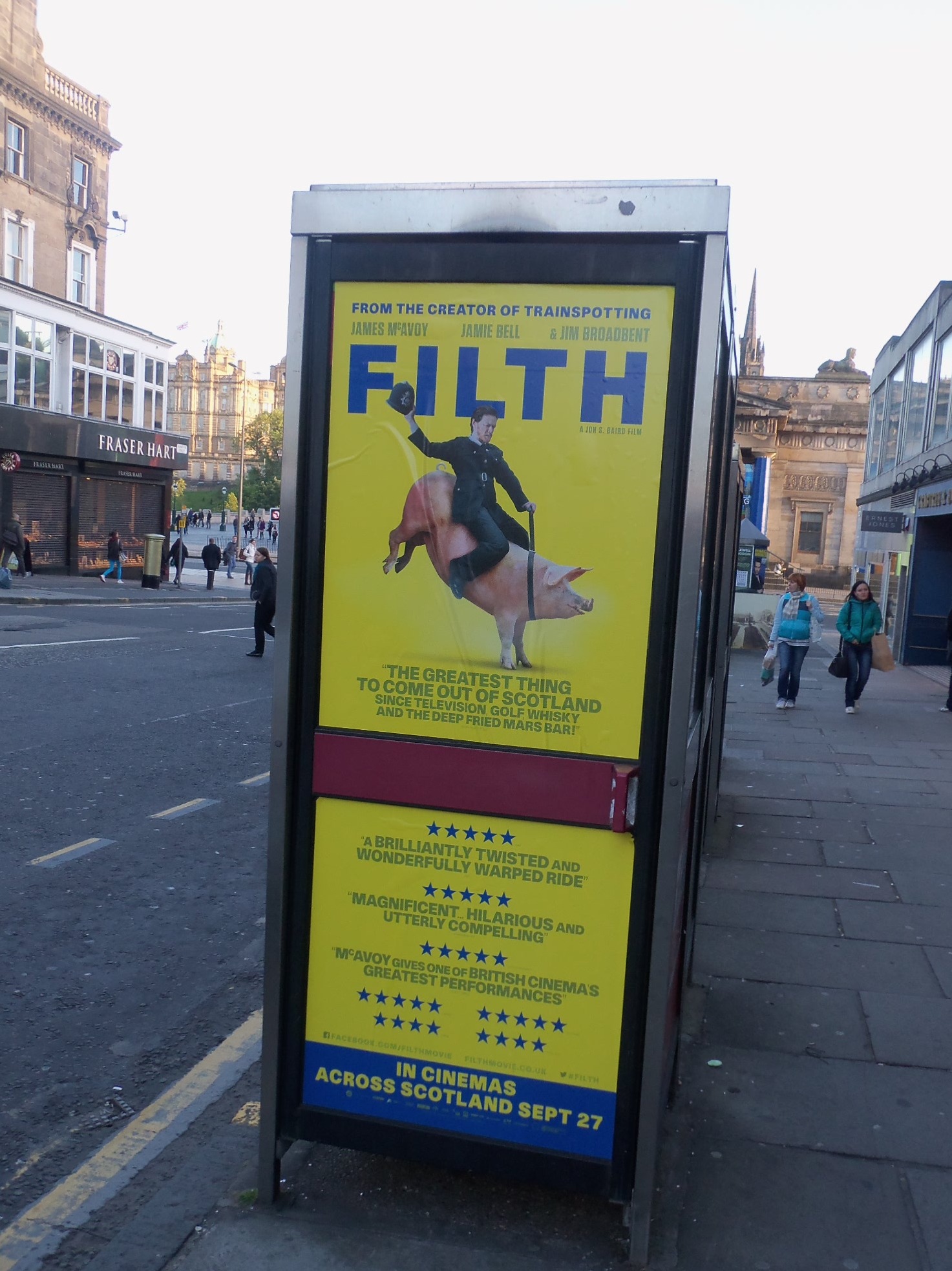
I really like James McAvoy, and posters for his new movie were absolutely everywhere in Scotland:
For any Americans who might be feeling homesick, there were quite a few familiar chain stores around:
Every pub, cafe, and restaurant I visited in Ireland seemed to have a version of this hearty vegetable soup on the menu. It was delicious every time I ate it, but never more so than the day I arrived in Dublin.
I was exhausted from the flight, and by the time I made my way from the airport to the hotel, it was almost noon and I was really hungry. However, I was determined to see the National Gallery before finding a place to get lunch. Luckily, the Gallery has a cafe on site. And since it was cold and rainy outside, soup seemed like a perfect meal.
I was expecting something similar to the American version of vegetable soup–a broth with tomatoes and other mixed vegetables–but I was pleasantly surprised when I tasted this creamy, potato-based soup.
The recipe below is an adaptation of the one found here. I’m not much of a cook, but this soup is not difficult to prepare, and is a good approximation of what I had in Ireland. Every time I eat it, I’m reminded of the great time I had in that beautiful country, and all the nice people I met there.
Irish Vegetable Soup
4 Tbsp. butter
1 small onion, chopped
2-3 garlic cloves, minced
2 leeks (white parts only), washed and sliced
2 parsnips, peeled and sliced
2 medium potatoes, peeled and cut into 1-inch pieces
2 carrots, peeled and sliced
4 cups vegetable broth
2/3 cup skim milk
1-2 cubes vegetable bouillon
salt and pepper to taste
In a stockpot or large saucepan over medium heat, melt the butter. Add the onion, garlic, and leeks, cover, and cook, stirring once or twice, for 5-7 minutes, or until the vegetables are soft but not browned. Add the parsnips, potatoes, carrots and stock or broth, cover and cook for 25-30 minutes, or until the vegetables are tender. Remove from the heat and stir in bouillon cubes, then let cool for 10 minutes.
Working in batches, transfer the soup to a food processor or blender and puree until smooth. (Or puree in the pot with an immersion blender.) Return the soup to the pot, whisk in the milk, and season with salt and pepper. Simmer until heated through.
To serve, ladle the soup into shallow bowls. It tastes especially good with Irish soda bread!
My sister and I recently attended the Utah Shakespeare Festival in Cedar City, UT. Though the drive from Salt Lake City is kind of a drag, the festival is worth the long hours in the car.
This year’s plays
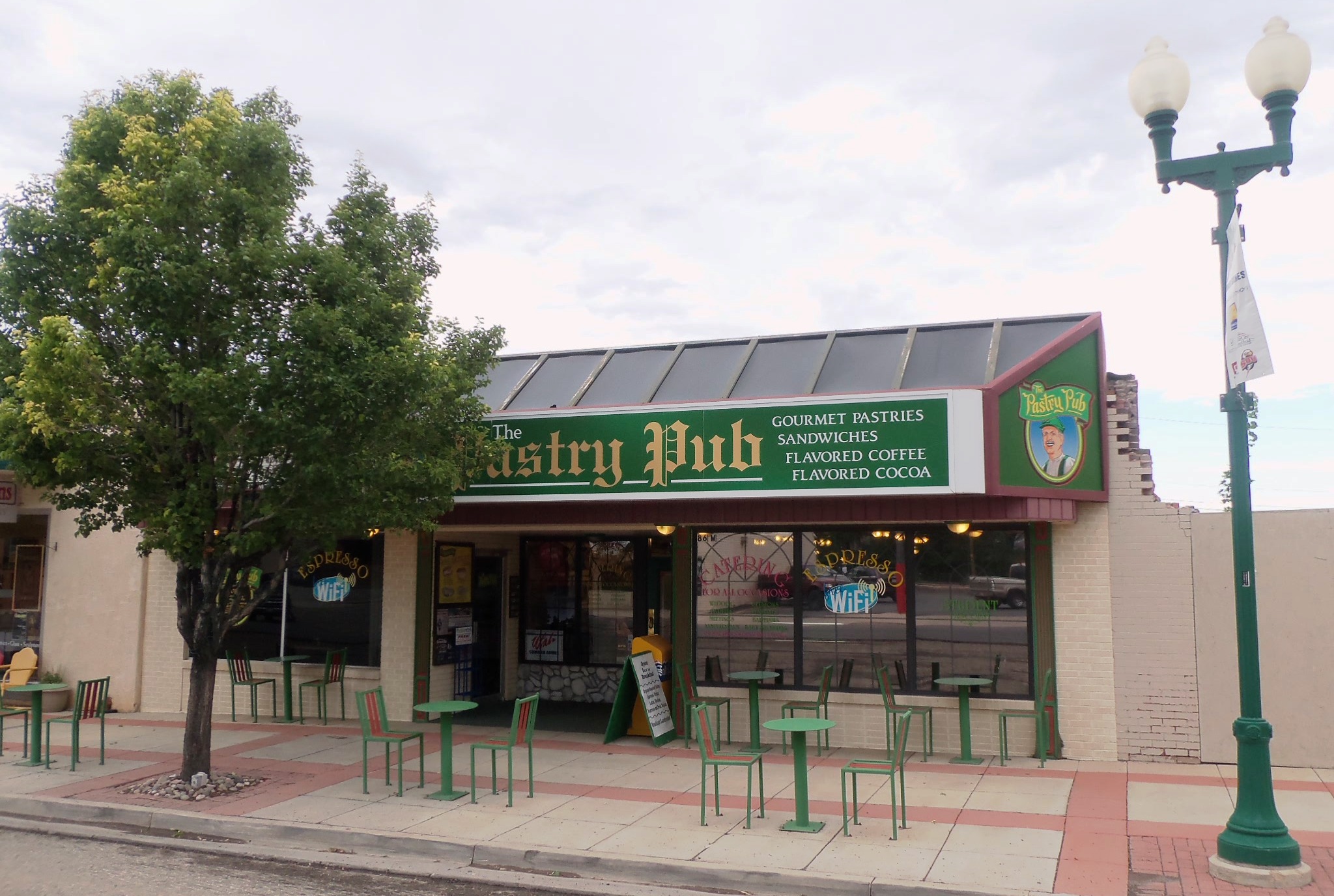
After arriving in Cedar City, we stopped at the Pastry Pub to get a snack. This charming restaurant is located a few blocks away from the festival and they serve amazing chai shakes.
The Pastry PubInside The Pastry Pub
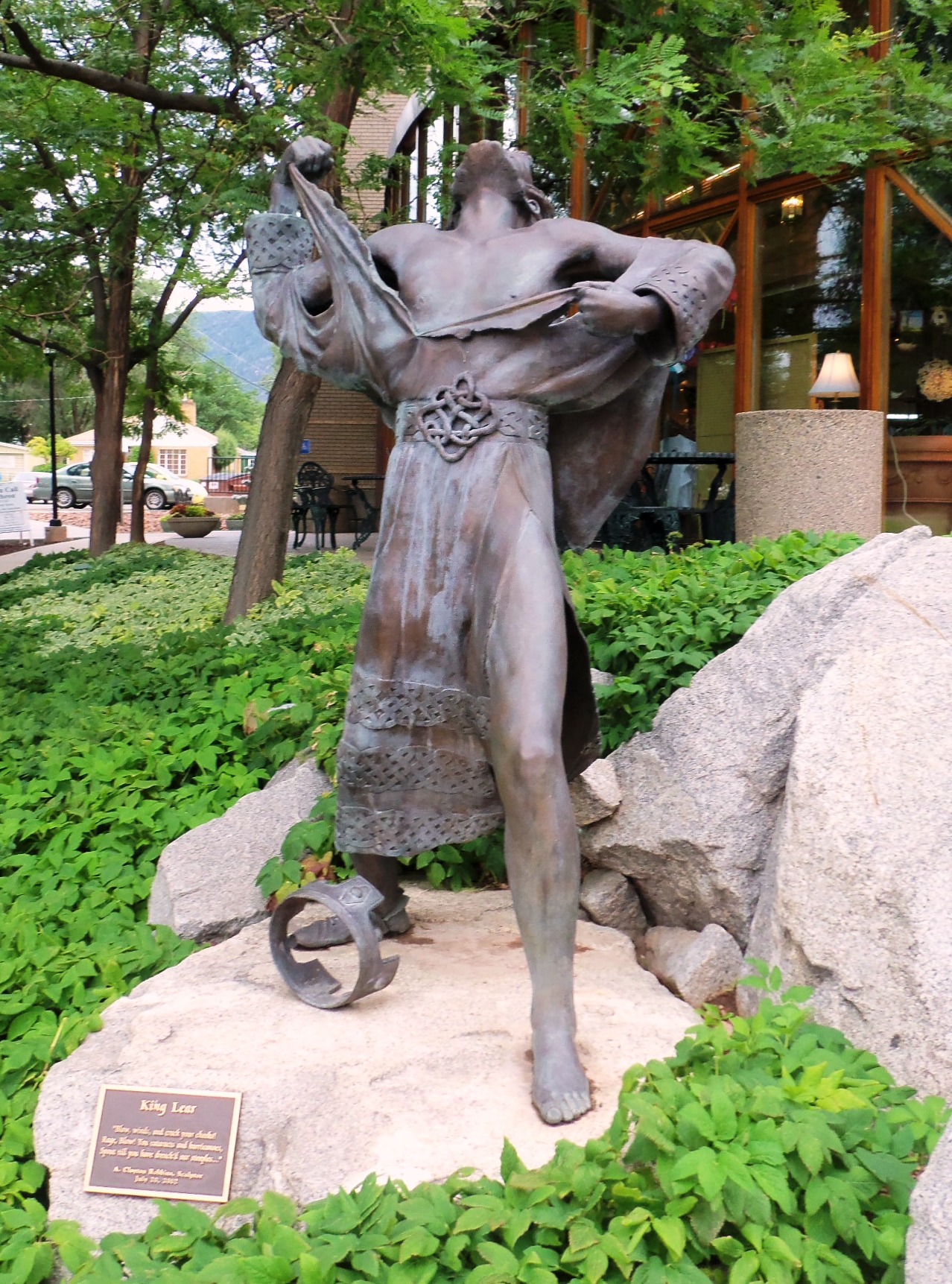
We walked around the festival grounds and enjoyed looking at the various statues of Shakespearean characters. We also checked out the information near the ticket windows about Shakespeare’s history cycle. It was being presented as part of the festival’s “Complete the Canon” project.
JulietJuliet, up closeKing LearFallstaffTitania
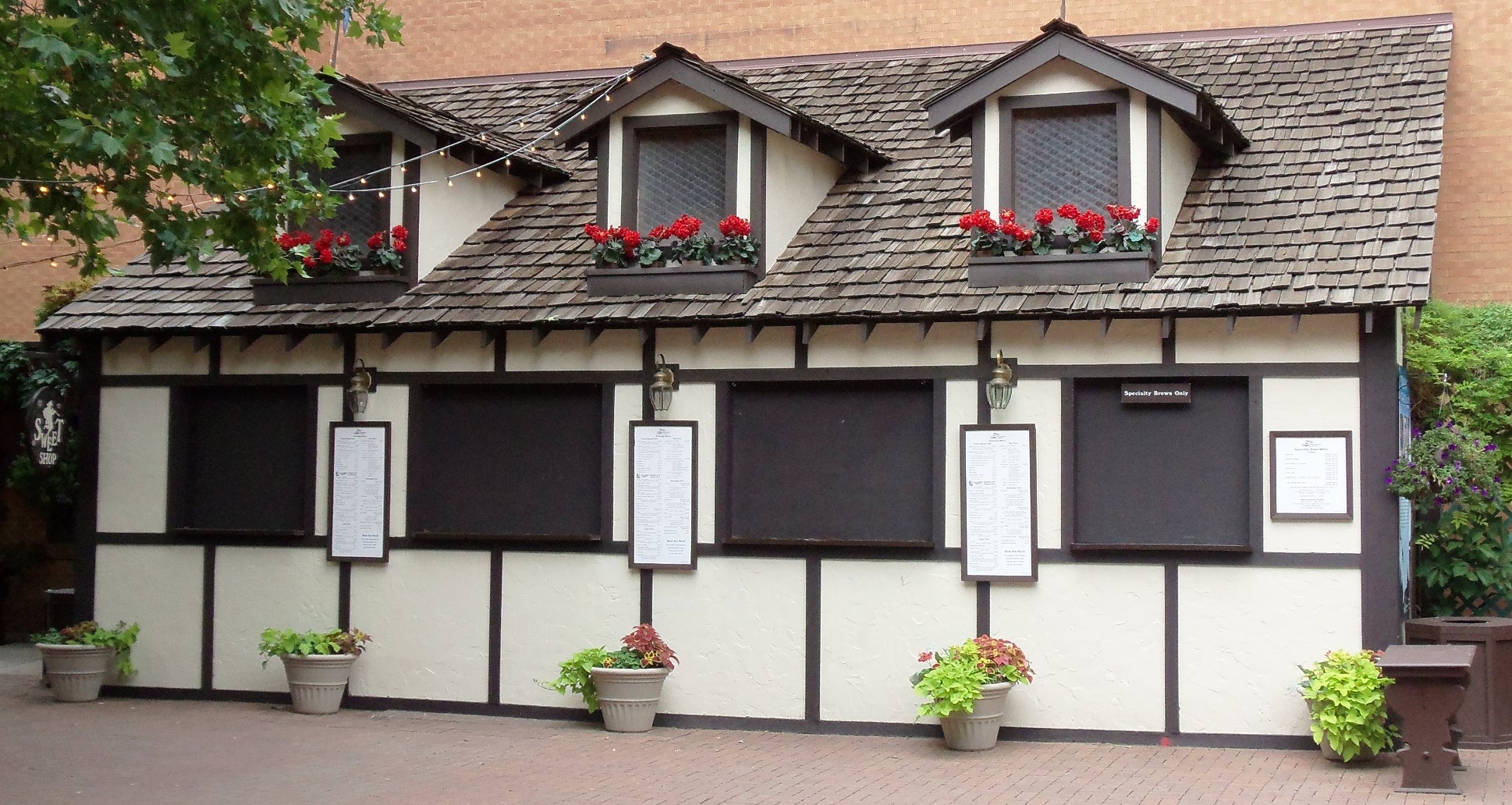
A fun part of the festival experience is a visit to the Sweet Shop, where we were looking forward to ordering an Irish jacket potato and vegetable and cheese pasty, along with one of the famous fruit tarts. However, the menu has changed, and overall, it’s a bit of a disappointment. Pasties are no longer available, and baked potatoes can only be ordered as part of a Greenshow picnic meal, rather than ala carte. The tarts tasted different this year as well—the dough seemed saltier and tougher.
The Sweet ShopNow serving Diet Mountain Dew, Shakespeare’s favorite!
A highlight of the evening is the play orientation with festival founder Fred C. Adams. He always provides interesting historical contexts and insights into the evening’s plays. At the time Shakespeare was writing “The Tempest”, reports describing the “new world” were coming back to England from the Jamestown colony, which provided inspiration for the bard’s final play.
Greenshow dancers
We also attended the Greenshow, a 40-minute song and dance program on the green and the courtyard surrounding the Adams Shakespearean Theatre. As always, it was very crowded. During this time, there were other people in period costumes throughout the courtyard, including “wenches” (both female and male) selling tarts and other treats, and a performer doing period woodworking.
Old-timey woodworking
The play itself was wonderful. I love “The Tempest”, and Henry Woronicz was wonderful as Prospero. The entire cast did a wonderful job, and the set design and special effects were top notch. Some excellent and detailed reviews of the play can be found here.
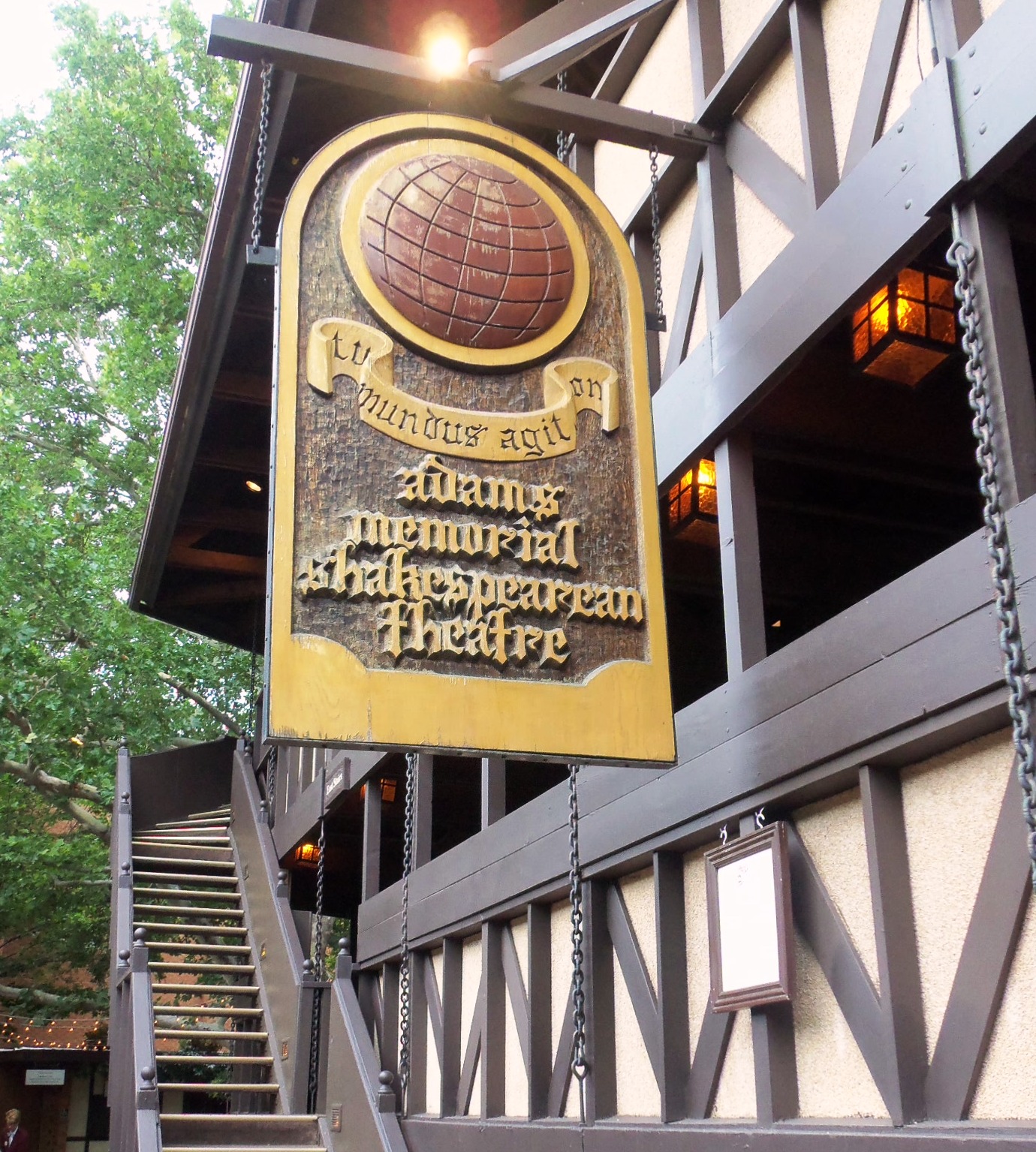
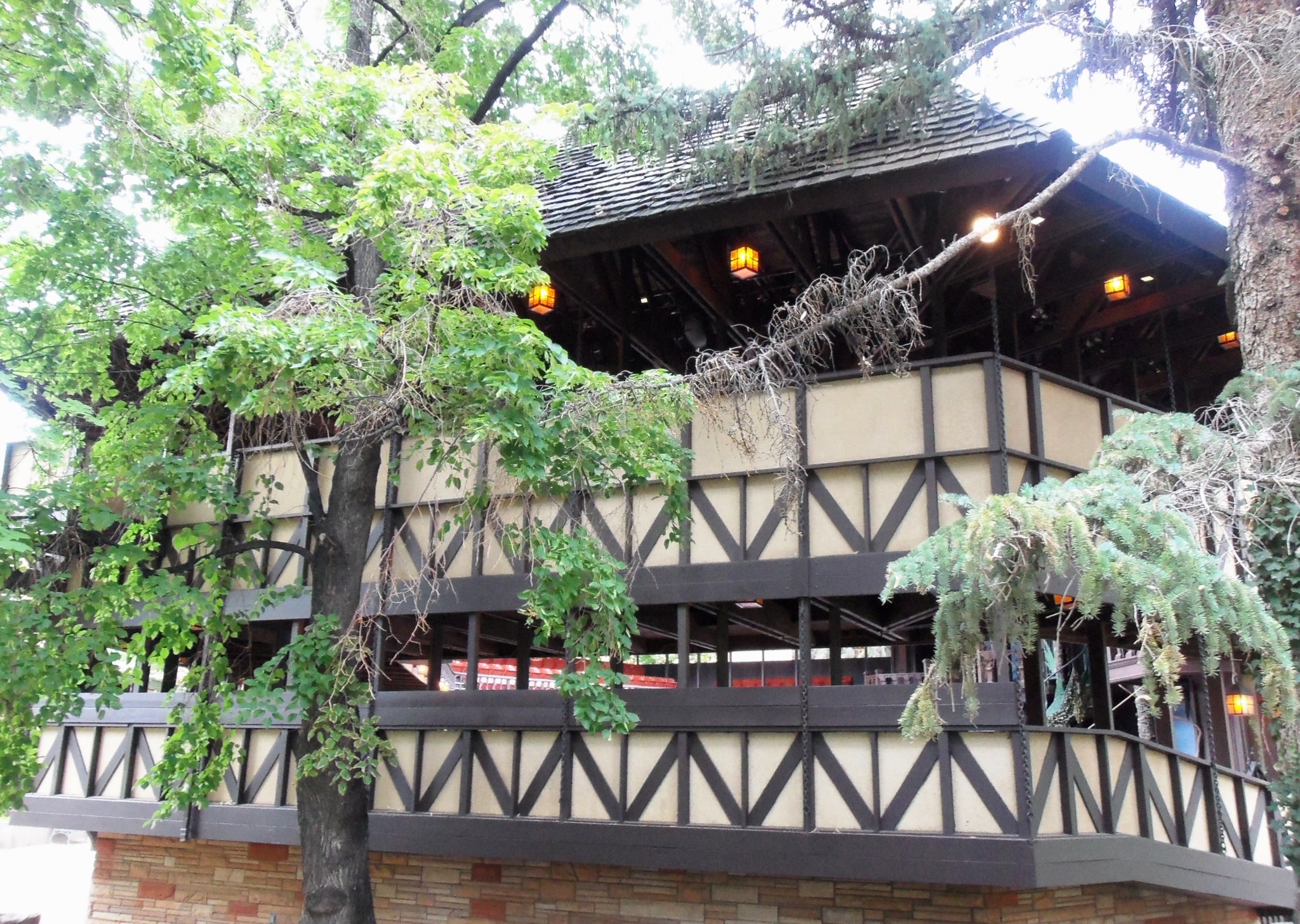
Before the show (no photography is allowed during the play)An exterior view of the theater
After the play, we headed to Marie’s French Bakery & Bistro which was open till midnight (what a great idea!). The man working there greeted us with a friendly “Bon soir,” and was pleased when we responded properly (by repeating the same thing back to him). I ordered a key lime tart and a chocolate éclair, both of which were excellent. The prices were reasonable, and we’ll definitely stop there again the next time we’re in town to see a play.
Millcreek Venture Out is a fun event held every Friday evening during the summer (June through August) in the East Millcreek neighborhood of Salt Lake City, UT.
I visited this evening at around 7:00 pm, mostly for the Farmers Market where I got some pesticide-free tomatoes, and a bag of apricots. The apricots came from a fruit share program operated by Green Urban Lunchbox. They’re a non-profit program “that focuses on issues pertaining to urban agriculture, sustainability and food security.” Their mobile greenhouse was pretty cool.
The Farmers Market also featured arts and crafts, food vendors (I highly recommend the Nutella crepes), henna tattoos, a petting zoo (with cute baby goats!), and live music. A different movie is shown every week at dusk.
The complete schedule can be found here. If you’re in the area, it’s worth checking out.
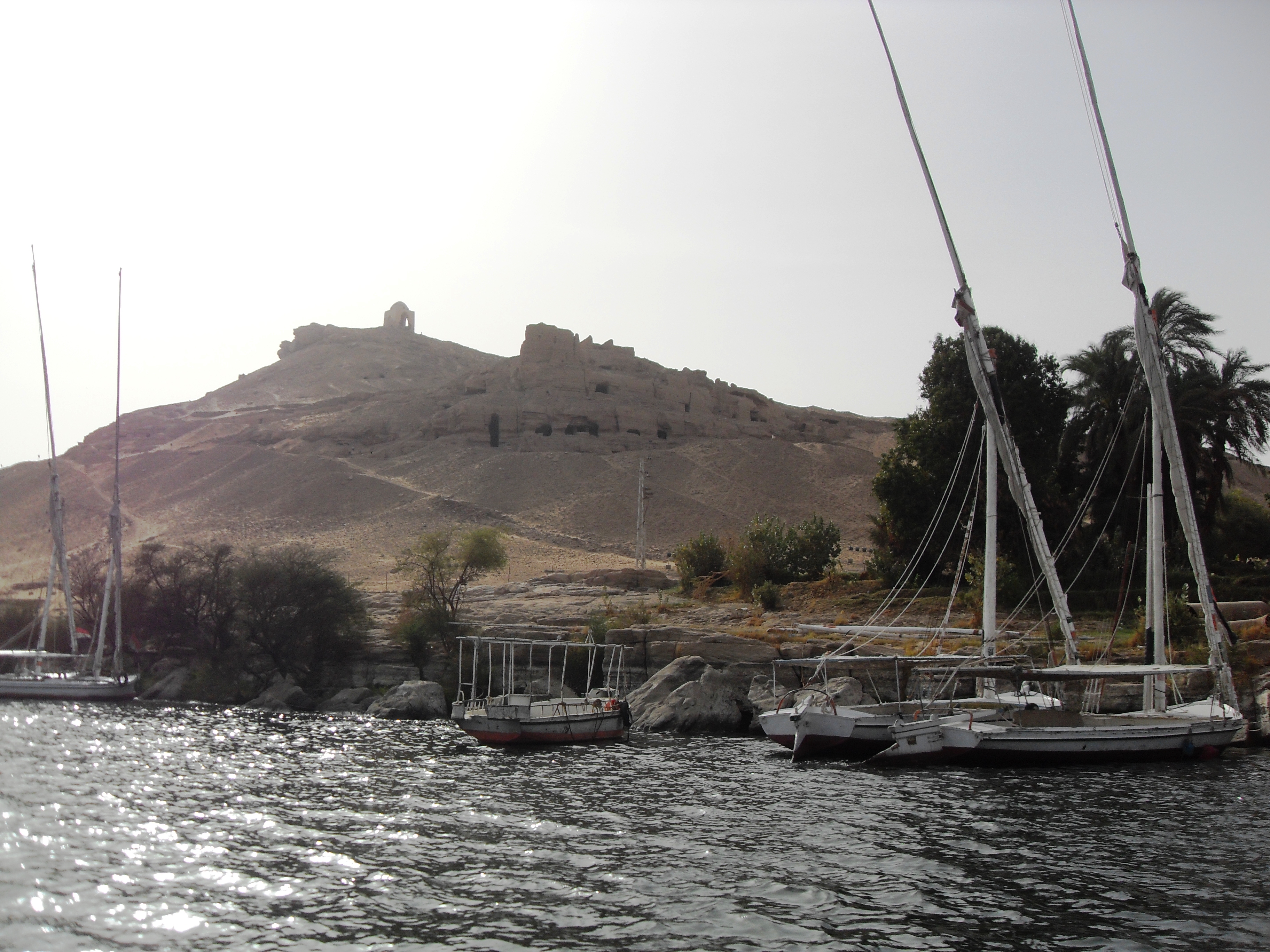
Along the Nile River, the scenery is ever-changing. The calm, lazy water is a dark grayish green, often brightened by a passing felucca with its large white sails billowing in the breeze; or even a Nubian boy, paddling a tiny wooden rowboat by hand while singing a cheerful sailing song in surprisingly good English.
On one side of the river is the Sahara, stark and desolate, its pale golden sands burning in the sun. On the other, lush green palm trees and farmers’ fields, where people use cattle to plow, and move crops in carts pulled by donkeys.
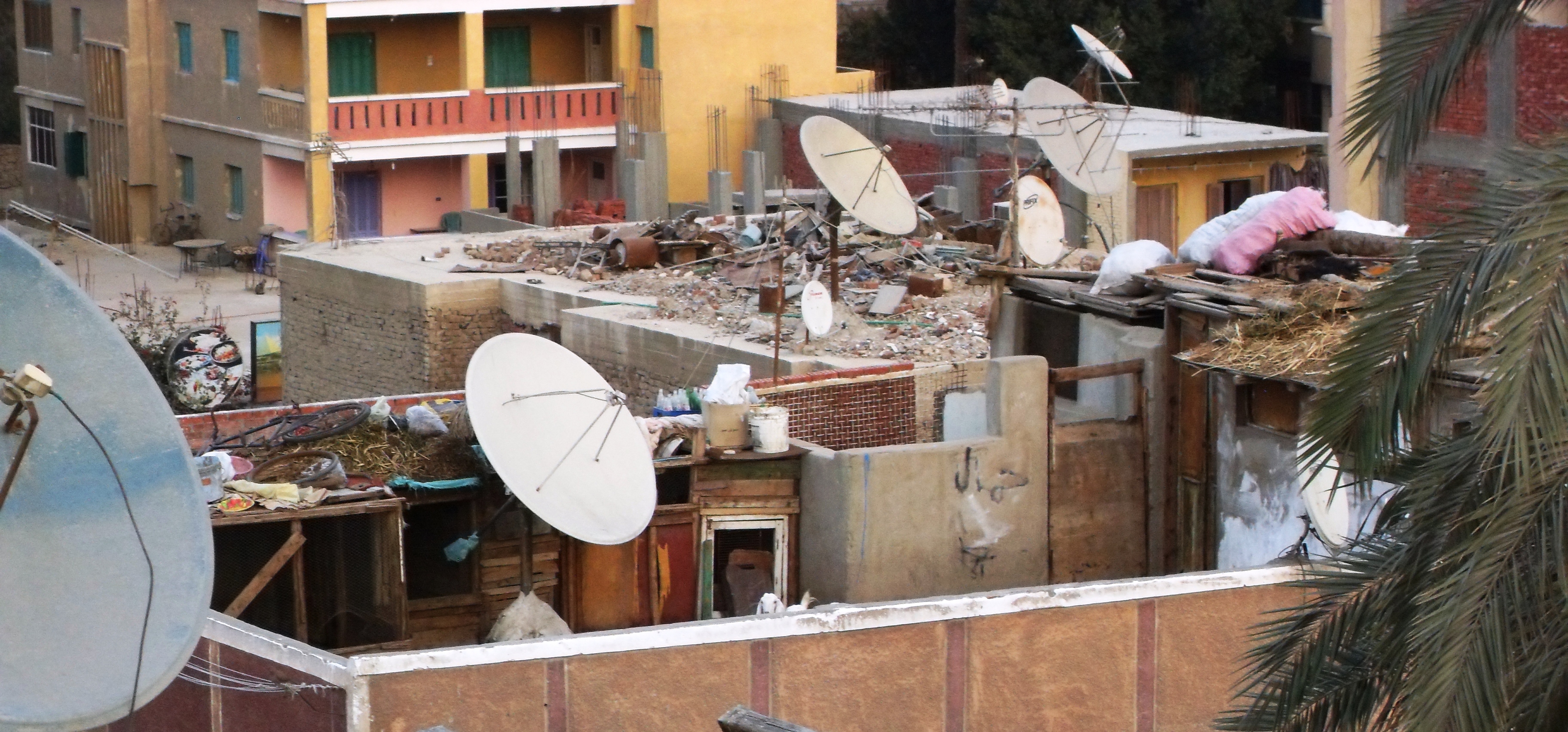
The farmland gives way to unfinished brick cities, full of tall, roofless buildings topped by the massive satellite dishes that went out of fashion 20 years ago in the US. The old dishes often keep company with animals, such as goats, chickens, or geese in rusted cages. Some of the buildings have been plastered and painted, creating a bright spot of eggshell blue or cherry red among the sun-bleached cement and brick.
At dusk, the hazy gray sky burns yellow and orange as the sun sinks into the glistening silver river. Away from the city lights, the palm trees and desert sand dissolve into the eerie blackness of 4000 years ago. All is still and silent, but only for a few moments, until the deck lights chase away the specters of Isis and Osiris, and it’s happy hour for the rest of the night.
I visited Ireland in September of 2012. I never would have imagined that touring a creepy old jail would be a highlight of my trip to such a beautiful country, but it was a fascinating experience. The history of the Gaol is tightly entwined with the overall history of Ireland.
On my last full day in Ireland, I joined a few other people in my Contiki group for an afternoon tour of this historic site. We had to wait about an hour for the next available tour, and spent the time looking through the museum, which features many artifacts related to the Easter Rising of 1916.
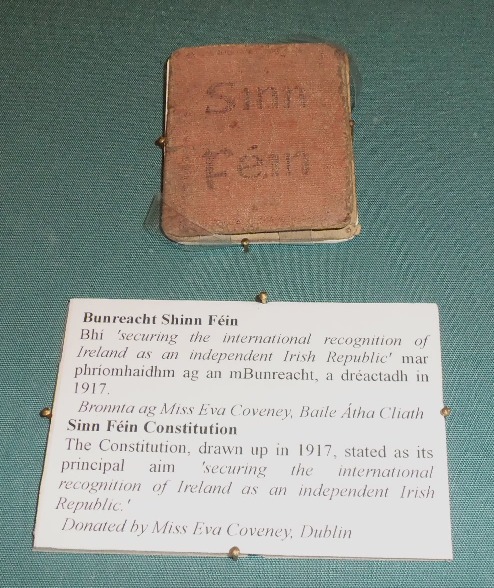
A copy of the Sinn Fein.
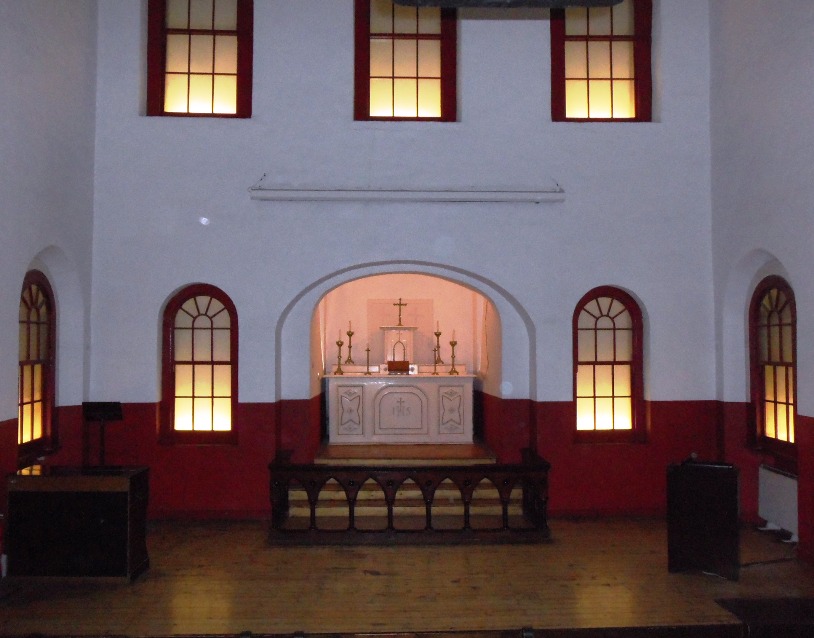
Our tour guide was excellent, and shared many interesting facts and anecdotes about the jail. The tour began in the chapel, where we watched a video featuring pictures of some of the prison records. Many people were imprisoned for very minor offenses—the most troubling picture in the video was of the record for a young child who was jailed for stealing four loaves of bread during the Irish Famine.
Chapel in Kilmainham Gaol.
Our guide also shared the story of Joseph Plunkett, a leader of the 1916 uprising. The night before he was to be executed, he was allowed to marry his fiancée, Grace Gifford, there in the chapel. “Can you imagine getting married, knowing that you won’t see each other again afterward?” she asked.
Cell in the oldest section of the Gaol.
Next, the tour moved through the oldest part of the building. Here, the guide explained that the Gaol was meant to be an example of prison reform, but conditions quickly became overcrowded, particularly during the famine. Men, women, and children were all crowded together into the same space; petty criminals were locked up with murderers. For many of the adult prisoners, the Gaol served as a “waiting room” until they were transported to Australia.
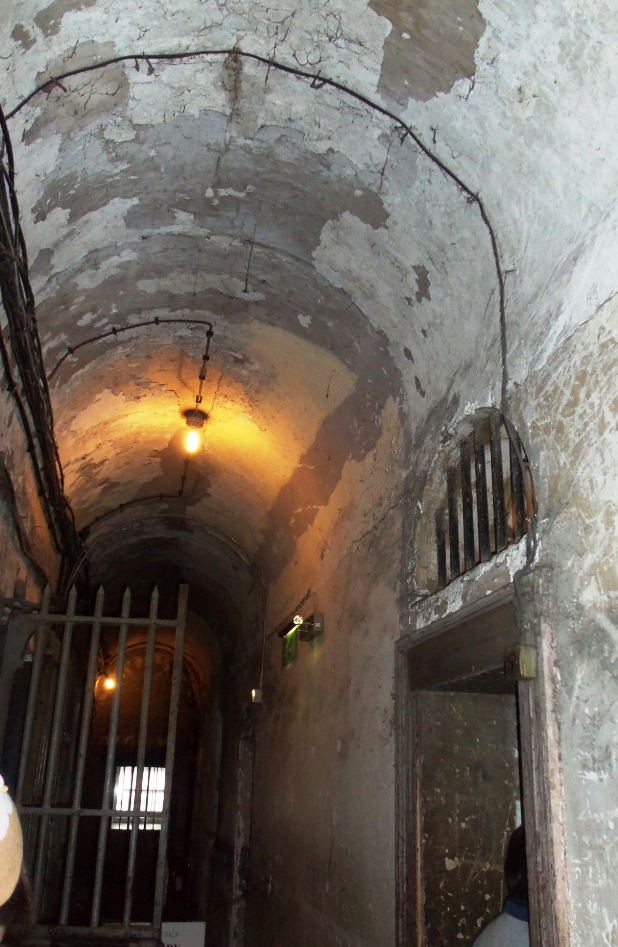
Corridor in the oldest section of the Gaol.
As we stood in the corridor, she told us that conditions became so overcrowded that people would have to sleep right on the floor where we were standing because there was no room in the cells. Most prisoners were given only a thin blanket and a Bible, and served meals that were usually just gruel. Still, she suggested that conditions in the Gaol might have been an improvement considering the poverty that so many people were subject to, because at least in prison they had meals and a roof over their heads.
The guide then led us through the area where leaders of the Easter Rising had been jailed. Their names were listed on plaques about the cells they had occupied. She pointed out Joseph Plunkett’s cell, telling us that after he married Grace, she had been called back to the Gaol and they had been given ten minutes to say their goodbyes in that cell, with guards present.
Many leaders of the Easter Rising were held in this section of the Gaol.
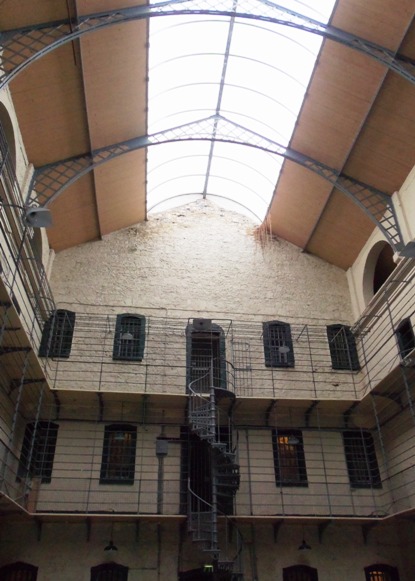
The next stop on the tour was in the most recent section of the Gaol, which was built in the Panopticon style. This area was designed so that light would come in from the high ceiling. The tour guide said it was meant to make the prisoners look up and think of God’s forgiveness so they would want to repent of the sins that had landed them in the jail. This section of the Gaol has also been featured in several movies.
The East Wing of the Gaol, designed in the Panopticon style.Detail of spiral staircase.
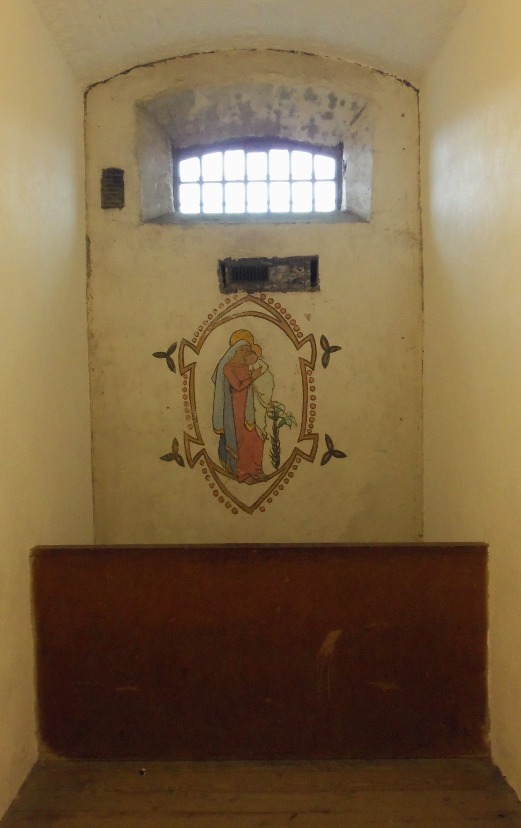
Grace Plunkett (nee Gifford) was imprisoned in this section of the Gaol for several months in 1923. A talented artist, she painted a mural of the Madonna and Child on the wall of her cell, where it still remains.
Grace Plunkett’s cell with Madonna and Child mural.
Last, the guide led us to the outdoor area where the leaders of the Easter Rising were executed. However, by this time it was pouring rain so we could only take a quick look at the space before heading back inside. The guide told us that one of the men executed that day was so badly injured that he could not stand and had to be strapped to a chair for his execution.
Outdoor area where leaders of the Easter Rising were executed.
The Gaol was closed in 1924, and the building fell into ruin. Some members of the Irish government wanted to tear the building down, but in the 1960’s there was a movement to restore the Gaol and keep it as a historical monument. On the third floor of the museum area, there is a film playing where people are being interviewed about the Gaol and why they think it should be preserved. Most of the people said something about it being a reminder of the nation’s history, and learning from past mistakes.
All in all, the tour was a haunting, but fascinating experience. I highly recommend it for anyone who has any interest in history.
Several months after my visit to Ireland, we began discussing the concept of shared linking objects in the rhetorical theory course I was taking. Vamik Volkan writes that, “Large groups mourn after their members share a massive trauma and experience losses.” This mourning can be manifest through “monuments related to the massive trauma or to their ancestors’ massive trauma at the hands of others.” It seems to me that Kilmainham Gaol is one such monument. There were many traumatic incidents in Irish history during the years the Gaol was open (1796-1924), and it is very closely linked with those traumatic incidents, particularly the Easter Rising.
Volkan writes that, “When a monument evolves into a shared linking object, the functions that are attached to it will vary, depending on the nature of the shared mourning that the group is experiencing… A monument as a shared linking object is associated with the wish to complete a group’s mourning and help its members accept the reality of their losses. On the other hand, it is also associated with the wish to keep mourning active in the hope of recovering what was lost; this latter wish fuels feelings of revenge. Both wishes can co-exist: one wish can be dominant in relation to one monument, while the other is dominant in relation to another monument. Sometimes a monument as a linking object absorbs unfinished elements of incomplete mourning and helps the group to adjust to its current situation without re-experiencing the impact of the past trauma and its disturbing emotions.”
In a way, I think Kilmainham Gaol functions as a shared linking object, particularly since people preferred to have it preserved rather than torn down. When I shared this in the class discussion, my friend Erin asked whether I think the Gaol keeps the grief and resentment alive, or if I think it serves as a monument to the fact that that horrible time is over. I replied that I think the Gaol serves as a monument to the Irish people’s survival of that awful time, and a reminder not to let those sorts of events be repeated. I doubt whether the mourning for those tragic events can ever truly be “completed,” but I do think the Gaol “absorbs unfinished elements of incomplete mourning and helps the group to adjust to its current situation without re-experiencing the impact of the past trauma and its disturbing emotions,” as Volkan stated in his paper.
Kilmainham Gaol is located on Inchicore Road, Kilmainham, Dublin 8. The adult admission fee is €6.00.
Here are some pictures from my first trip outside the US, way back in 2005. I loved visiting England and I never wanted to leave.
I should probably apologize for the music (I know, it’s so mid-2000’s), but I still like the song, and it reminds me of the wonderful time I had on this trip.



































 Alembic Publications